
Weight‑loss experts increasingly discuss weight loss medications such as GLP‑1 receptor agonists and related therapies in healthcare. Patients often ask about the differences among Ozempic, Wegovy, Rybelsus, and Mounjaro, which differ in formulation, FDA-approved use, dosing, effectiveness, and administration.
Understanding these differences is key for patients. Some medications were started for type 2 diabetes, others for chronic weight management with obesity or associated conditions. The right choice depends on medical history, weight goals, lifestyle, insurance, and tolerance to side effects.
In this guide, we will walk through how Ozempic, Wegovy, Rybelsus, and Mounjaro work. By highlighting the similarities and differences among these medications, you’ll gain an overview before a discussion with your healthcare provider. To begin, let’s explore the science behind GLP-1 and GIP medications for weight loss.
Understanding GLP-1 and GIP Medications for Weight Loss
Most of these medications belong to a class called GLP-1 receptor agonists. GLP-1 stands for glucagon-like peptide-1, a hormone naturally released in the intestines after eating. These medications help regulate blood sugar, slow stomach emptying, and increase feelings of fullness.
Mounjaro works slightly differently because it targets both GLP-1 and GIP receptors. GIP stands for glucose-dependent insulinotropic polypeptide, another hormone involved in appetite regulation and metabolism. This dual-action mechanism is one reason Mounjaro has gained attention for substantial weight-loss results.
These medications are not “magic injections.” They work best when combined with dietary changes, exercise, and long-term lifestyle modifications.
Ozempic: A Diabetes Medication Commonly Used for Weight Loss
Ozempic is an injectable semaglutide medication available for type 2 diabetes management. However, many healthcare providers prescribe it off-label for weight loss because semaglutide reduces appetite and food cravings significantly.
Doctors prescribe Ozempic once weekly through a subcutaneous injection. It is usually started at a lower dose and gradually increased to reduce gastrointestinal side effects such as nausea or vomiting.
Patients using Ozempic often report:
- Reduced appetite
- Feeling full sooner
- Decreased cravings
- Gradual weight reduction over several months
Although Ozempic can lead to substantial weight loss, it is not officially FDA-approved specifically for weight management. That distinction belongs to Wegovy, which contains the same active ingredient but at higher doses.
Wegovy: Semaglutide Specifically Approved for Weight Loss
Wegovy contains the same active ingredient as Ozempic, semaglutide, but it is specifically FDA-approved for chronic weight management.
Wegovy is beneficial for adults with:
- Weight issues
- People managing weight and weight-related medical conditions such as hypertension, sleep apnea, or type 2 diabetes
The main difference between Ozempic and Wegovy is dosage: Doctors prescribe Wegovy at a higher maintenance dose, which often leads to greater weight loss in studies.
Patients taking Wegovy may experience:
- Significant appetite suppression
- Reduced caloric intake
- Improved satiety
- Long-term weight management benefits
Because demand for semaglutide medications remains high, supply shortages and insurance coverage issues can affect access to Wegovy.
Rybelsus: The Oral Version of Semaglutide
Rybelsus is the only oral semaglutide option among these, available as a daily tablet instead of an injection.
Like Ozempic, FDA has approved Rubelsus for the treatment of type 2 diabetes, not for weight loss. However, some healthcare providers may prescribe it off-label for patients seeking modest weight reduction who prefer avoiding injections.
How to take Rybelsus?
- Take Rybeslsus on an empty stomach
- Take it with a small amount of water
- Take it at least 30 minutes before food or other medications
While Rybelsus can promote weight loss, studies generally show less weight loss than injectable semaglutide products.
In conclusion, Rybelsus is a more convenient alternative for patients who are uncomfortable with needles.
Mounjaro: Dual-Action Medication With Significant Weight Loss Results
Mounjaro has become one of the most talked-about medications in weight management due to its strong weight-loss outcomes in clinical trials.
Unlike semaglutide-based medications, Mounjaro works on both GLP-1 and GIP receptors. This dual-action approach may enhance appetite control and metabolic regulation.
Like most medications we discussed above, clinicians administer Mounjaro once weekly, and FDA initially approved it for the management of type 2 diabetes. However, tirzepatide has also received approval under a separate brand for chronic weight management.
Clinical trials demonstrated that some patients using tirzepatide achieved:
- Major reductions in body weight
- Improved blood sugar control
- Reduced appetite and cravings
Many obesity specialists consider Mounjaro one of the most effective currently available injectable medications for weight loss.
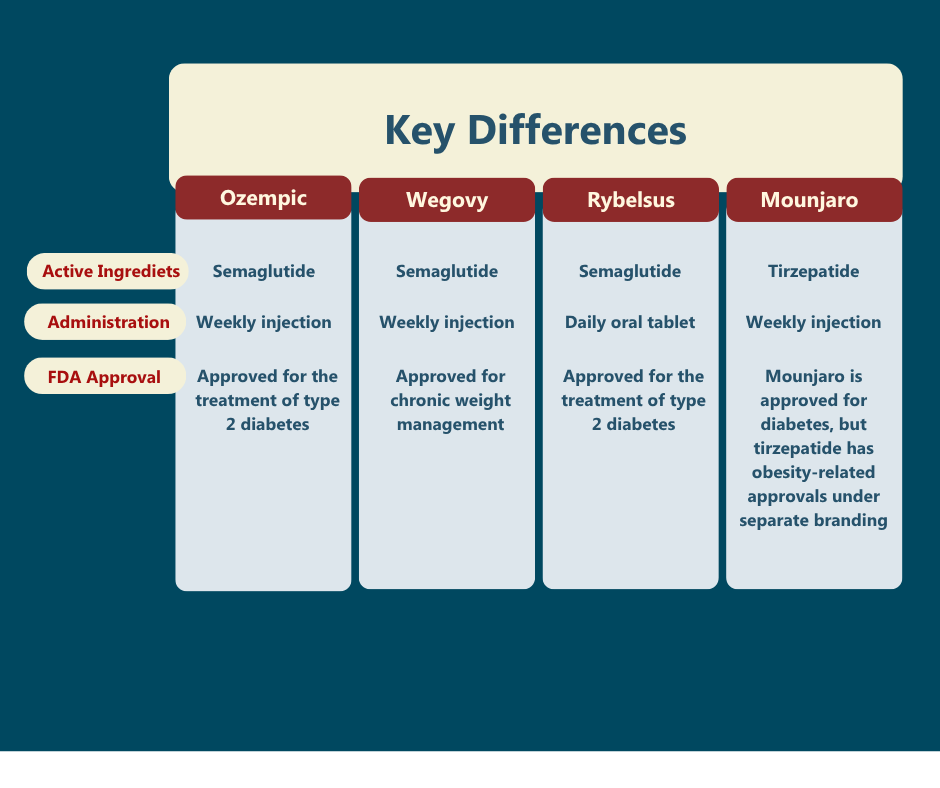
Key Differences Between Ozempic, Wegovy, Rybelsus, and Mounjaro
Active Ingredients
- Ozempic and Wegovy both contain semaglutide.
- Rybelsus also contains semaglutide, but in oral form.
- Mounjaro contains tirzepatide
Method of Administration
- Ozempic: Weekly injection
- Wegovy: Weekly injection
- Rybelsus: Daily oral tablet
- Mounjaro: Weekly injection
FDA Approval for Weight Loss
- FDA specifically approved Wegovy for chronic weight management.
- Ozempic and Rybelsus are approved for the treatment of type 2 diabetes.
- Mounjaro was initially approved for diabetes, but tirzepatide now also has obesity-related approvals under separate branding.
Weight Loss Effectiveness
Clinical studies generally show:
- Mounjaro (tirzepatide) may produce the greatest average weight loss.
- Wegovy provides significant weight reduction.
- Ozempic offers meaningful weight loss, though often at lower doses.
- Rybelsus tends to produce more modest weight loss.
Individual results vary significantly depending on adherence, lifestyle, metabolism, and underlying medical conditions.
Common Side Effects of Mounjaro, Wegovy, Ozempic, and Rybelsus
The most common side effects are gastrointestinal and may include:
- Nausea
- Vomiting
- Diarrhea
- Constipation
- Bloating
- Abdominal discomfort
Most side effects improve as the body adjusts to treatment. Slow dose escalation is commonly used to improve tolerability.
Serious but less common risks may include:
- Pancreatitis
- Gallbladder disease
- Severe dehydration
- Thyroid tumor warnings in animal studies
Patients should always discuss personal medical history and risks with a qualified healthcare provider before starting treatment.
Having reviewed the benefits and risks, let’s discuss who may be a suitable candidate for these medications.
These medications may be considered for adults who:
- Have weight management issues.
- Person in higher weight body with related health conditions
- Have struggled with weight loss through lifestyle measures alone
- Require improved blood sugar control alongside weight management.
Not every patient is an appropriate candidate. Providers evaluate:
- Body mass index (BMI)
- Existing medical conditions
- Current medications
- Gastrointestinal history
- Family history of endocrine tumors
- Pregnancy or breastfeeding status
A personalized medical evaluation remains essential before starting any prescription weight-loss medication.
In summary, Ozempic, Wegovy, Rybelsus, and Mounjaro are newer-generation medications that help regulate appetite, blood sugar, and weight. Although similar, each offers unique characteristics in terms of formulation, administration, FDA approvals, and weight-loss outcomes.
Wegovy is specifically approved for obesity management, while Ozempic and Rybelsus are primarily diabetes medications often used off-label for weight loss. Mounjaro’s dual-action mechanism has made it a breakthrough in obesity medicine, driven by its impressive clinical trial results.
The best medication depends on individual goals, medical history, tolerance for side effects, insurance coverage, and provider guidance. Long-term success still depends on sustainable lifestyle changes alongside medical treatment.
Frequently Asked Questions (FAQs)
Which medication causes the most weight loss?
Clinical trials suggest that tirzepatide-based therapy, including Mounjaro, may produce greater average weight loss than semaglutide-based therapies in many patients.
Is Wegovy stronger than Ozempic?
Wegovy contains the same active ingredient as Ozempic but is prescribed at higher doses specifically intended for chronic weight management.
Are these medications lifelong treatments?
Some patients may require long-term therapy to maintain weight loss. Discontinuation can sometimes lead to weight regain if lifestyle changes are not sustained.
How quickly do these medications start working?
Many patients notice changes in appetite within weeks, but significant weight loss usually develops gradually over several months.
Can these medications be used together?
These medications are generally not combined because they work through overlapping hormonal pathways. Combining them may increase side effects and risks.
